This is just a few of the words that reflect what I feel I have gained from this class. It really has been my favorite, and I am ever grateful for what I will take away from it!
Friday, December 9, 2011

Monday, December 5, 2011
Final Report on my PLN

Thus far, I have really enjoyed using EDM310 as my PLN. The lab assistants, Dr. Strange's Strange Thoughts, and the many educators that I have researched because of this class have made me a more curious learner and eager teacher. I swear that one day I will come to love Twitter! I'm not opposed to it. That's really not it. I just need to sit down for a good two or three hours (on a computer that moves faster than my grandmother) and learn how to really use it. I love all the links and contributions that some of the people I follow make, and I would really like to jump on board with that. I have found the educator's pln .ning to be extremely useful. There are quite a few authors and videos on there that are very thought provoking.
In conclusion, I have certainly learned the value of a PLN. I can't wait until I begin to use Twitter, or possibly some other social networking site and develop a list of people that I can actually hold conversation with to discuss the issues arising in my schoolwork, and soon my classroom.
C4K November
The first blog I commented on was one from Mrs. Yollis' room! She even found a way to use her blog when teaching math. There were example math problems that her students had helped to create on her blog and she asked teachers from all over the country to get their students to help contribute to the math problems on the blog as well. There was a comment from Wellford, SC (close to my old stomping grounds). The teacher and her students created math problems involving the state bird, a wren, the state tree, a palmetto, and other symbols that represent SC. I think this is a wonderfully interesting way to teach math. Math is such a hard subject to ignite interest in that these web tools are needed to initially motivate the students to want to learn.
The second blog I commented on was of a student in Australia named Kayden. I found it really interesting that I was commenting on his blog at 11PM on Sunday November, 20 and he already had a post up for November 21. This post was about some of his favorite name brands. His brands were Nike and Adidas, thus I concluded that he was interested in sports. The brands had very interesting drawings and used bright colors that went together in a funky fashion. I asked Kayden what types of sports he is interested in and if the colors in these pictures reflect his personality.
I am sad to see the comments for kids blog posts come to an end in EDM310, but that does not mean that they cannot be carried on of our own free will. I enjoy reading teacher's blogs and getting ideas for new lesson plans or resources to check out. I think we can all agree that over the past four months, these kids blogs have taught us just as much as the educators.

C4T#4

I have recently had the pleasure of following Mr. William Chamberlain's blog. I have read so much about Mr. Chamberlain from Anthony Capps and Dr. Strange. The first post I read from him was about the real value of using technology in the classroom. This is most definitely a post that will stay with me for a long time. Mr. Chamberlain addresses his belief that technology's value in education is collaboration. I have always considered myself an open-minded individual who values other people's ideas, but I had not taken into consideration that the most valuable asset of technology in education could be just that. I knew it was beneficial, but I had never considered that it was the MOST valuable asset. It never occurred to me to put an order on the benefits gained from integrating technology and education. I am not completely positive that I fully agree with Mr. Chamberlain, but I can say that I do not disagree. Furthermore, I am excited to spend some serious time searching the internet, my PLN, and myself to discover what I believe to be the real value of using technology in education.
The second post I read by Mr. Chamberlain describes a book that he recently began reading. This book is by Anne Reeves and entitled, "Where Great Teaching Begins." First off, I think of my old English professor who would be appalled to see the word, "great" in a title. Mr. Chamberlain states that he is determined to read and think about the book in its entirety and to ensure that he completes this task, he will be writing a blog post for every chapter. I really love this idea and think that it could be very useful for children (especially in grades 3-6 of elementary ed). From this chapter, Mr. Chamberlain has taken a few key points. They are: choosing the learning the students need, and determining who the lesson plans are for. When Mr. Chamberlain is speaking of the learning the students really need, it reminds me of the comment he left about my comment of the first post of his I read. It said something to the effect of lesson plans are not to be geared around technology because there is no standard that requires students to use the computer. First, create a well structured lesson plan that focuses solely on the student's learning. Next, get creative and find a way to incorporate technology into the lesson. Mr. Chamberlain determined that his lesson plans are for himself, the students, and the administrator. All teachers have written a lesson plan, and most administrators have written a lesson (since they were probably teachers at some point). But, have any students ever created a lesson plan? I'm going to guess the majority will answer no. Mr. Chamberlain suggests that it might be a good idea. I agree! I think it's a fantastic idea to have children give suggestions of how they would like to teach a unit. Who knows how to better engage a student than a student? I think it would be a very interesting, telling, challenging, and possibly an extremely worth while experience.
Blog Post #14
I must say that Mr. Picardo's blog is one that I will have bookmarked for my entire teaching career. The title, "Box of Tricks" is really very fitting. His entire blog, besides being filled with stimulating posts, is loaded with different tools that are easily available to educators. The resources provided (not only in the list given to us)are mostly compatible with Mac and PCs and come with a brief description of the tool. This description was very helpful to me because I have a painfully slow computer so it was convenient for me to read which ones I wanted to take the time to open. It is a true talent the way Mr. Picardo has made using technology in the classroom seem like such a breeze. He comments in one of his posts that gaining support is one of the most difficult tasks. I can imagine that is the real struggle in integrating technology into education. I was so impressed with his long list of resources that I e-mailed them to my mother (who I am desperately trying to talk into using more technology in her last three years of teaching), her teacher friends, as well as classmates of mine, and education graduates.
I love the way Mr. Picardo has broken down his "Top 10 tips for using Teachnology in the classroom." Once this daunting task is divided into 10 ideas, it becomes a lot less overwhelming. This video would be very helpful to those trying to incorporate technology more effectively into their curriculum. Each step can be researched if the educator needs to know editing software to start using streaming video, for example. A list of internet resources is found on Mr. Picardo's blog if a teacher is looking to adopt tip 9 into their lesson plans (using internet tools). All of his tips seems like no brainers to the EDM310 students. We all know that video is effective in motivating students vs. lecture, and we are also aware that students, teachers, parents, and administrators greatly benefit from sharing their ideas all over the world and receiving feedback. However, we don't know all there is to know about any of these tips, so let's use this video as an inspiration to FIND OUT! For example, my husband and I are huge music enthusiasts. I would love to learn the many different ways to effectively integrate music into my curriculum. I know that some children take a very strong interest in music as well, and perhaps using that concept in teaching would enhance their comprehension, as well as inspire them to want to learn. Mr. Picardo intends for this video to be a starting point for teachers so that they will expand their knowledge of the various ways technology can be useful to their students. I believe he also wants each educator to figure out what using technology in the classroom means to them. He is giving us several intriguing tools that he hopes will spark our interest. However, we cannot let him do all the work for us!

I love the way Mr. Picardo has broken down his "Top 10 tips for using Teachnology in the classroom." Once this daunting task is divided into 10 ideas, it becomes a lot less overwhelming. This video would be very helpful to those trying to incorporate technology more effectively into their curriculum. Each step can be researched if the educator needs to know editing software to start using streaming video, for example. A list of internet resources is found on Mr. Picardo's blog if a teacher is looking to adopt tip 9 into their lesson plans (using internet tools). All of his tips seems like no brainers to the EDM310 students. We all know that video is effective in motivating students vs. lecture, and we are also aware that students, teachers, parents, and administrators greatly benefit from sharing their ideas all over the world and receiving feedback. However, we don't know all there is to know about any of these tips, so let's use this video as an inspiration to FIND OUT! For example, my husband and I are huge music enthusiasts. I would love to learn the many different ways to effectively integrate music into my curriculum. I know that some children take a very strong interest in music as well, and perhaps using that concept in teaching would enhance their comprehension, as well as inspire them to want to learn. Mr. Picardo intends for this video to be a starting point for teachers so that they will expand their knowledge of the various ways technology can be useful to their students. I believe he also wants each educator to figure out what using technology in the classroom means to them. He is giving us several intriguing tools that he hopes will spark our interest. However, we cannot let him do all the work for us!

Sunday, December 4, 2011
Final Project 16
Our group, The Septemberists, made a few tutorials of some really cool web tools. We hope that you find these resources interesting and encourage you all to make use of them with your future students.
Part 1-by: Frances Judd
Part 2-by: Hillary Parmer
Part 3-by: Greta Miller
Part 1-by: Frances Judd
Part 2-by: Hillary Parmer
Part 3-by: Greta Miller
Sunday, November 20, 2011
Additional Post #1
Add Sparkle to Your Words

I was a bit disappointed in myself that I didn't completely identify the metaphor discussed my Mr. Spencer is his "Pencil Integration" blog. I believe the main reason that I missed the direct connection he was trying to convey to his readers is simple. I took all possibility that a metaphor was an option out of my brain. I trusted this man to give us his opinion on education blatantly and that is unfortunate. How boring! I appreciate some jazz in writing and I wish that I had been able to see the connection. When I go back and read Mr. Spencer's blog post and insert technology and computers where pencils are written, I thoroughly agree with and enjoy his writing a billion times over. Furthermore, I read a good bit of Mr. Spencer's writing and believed him to be a well-educated, poised, fantastic writer. I gave him such credit that I took what he had written too seriously and forced myself to believe his theory on pencils. I wanted these underpriveledged children to be able to take pencils home too! I began agreeing with everything Mr. Spencer wrote and stopped thinking for myself on a deeper level. Not cool, Frances.
There are so many simple metaphors that we encounter on a daily basis. A daily log of metaphors are not a bad idea in the least. Some people find it annoying to jot down everything they hear or see. For these anti-compositionists, it should not be difficult to make a mental note of these daily examples. It rains pretty regularly in Mobile. I dare say someone has recently exclaimed, "It's raining cats and dogs!" I am fired up for Christmas this year! It is mainly because Dylan will understand Santa Claus a little better! After quite an intense argument the other day, I was told that "my eyes were smoldering." Not the compliment I was looking for after a hard day, but an example of a metaphor none the less. I heard a coworker speaking of her "old flame". Judging from contect clues, I don't believe she was speaking of last night's fire.
I think Mr. Pink's idea of creating a metaphor journal is a wonderful way for kids to realize how often metaphors are used, how much they enhance a story, and how clever they make one seem. The definition that I have found for metaphor comes from www.about.com and it seems to be the one that could be most easily understood by elementary students. It reads as follows: "A figure of speech in which an implied comparison is made between two unlike things that actually have something in common." While teaching a unit on metaphors, I would like to display this definition and start out each day reviewing it as well as some of the examples children have written in their metaphor journal. This journal could work for many different types of speech, such as similes, personification, alliteration, sarcasm, and many more (depending on the age group, of course). I would like to post different examples of metaphors in poems, children's books, and TV shows in my class blog and have students in my classroom and others (possibly from other regions of the world) add to the list so that students will see that metaphors are used all over by various age groups. This would also be interesting so see what types of metaphors are used in different countries.
I think Dr. Strange really put his finger on it when he stated the metaphors are used to spice up prose, poetry, conversation, and many other ways of communication. Telling it like it is can be inappropriate at times, boring at others, uncomfortable, or sometimes just plain difficult. Metaphors spark imagination and interest. Orson Scott Card eloquently states, "Metaphors have a way of holding the most truth in the least space."
Blog Post #13
Technology Fast

I chose this option because I was interested to see if my need for technology had increased in the past four months (since the beginning of school). As I suspected, it had. I really enjoyed this assignment because it made me aware of the many ways I am technology dependent. However, I did manage to complete the assignment in just one twenty-four hour period.
First of all, I knew that I would have to prep my husband for this technology fast so that he would not worry when I didn't answer my phone the entire day I was at school. I had to write him a note explaining the project, what bills had to be paid that day, what groceries were needed, what clothes were clean, when to pick Dylan up at day care,etc. That brings me to my next preparatory measure: I also had to warn the day care to call Alex's phone in case of an emergency instead of mine. This is a little depressing for me to admit, but one of the hardest things for me to give up was TV. I knew this was going to be difficult for me, primarily because it is what I use in the morning to keep Dylan occupied while I make breakfast, iron clothes, pack my lunch, and accomplish the rest of the tedious chores that make my day run smoothly. Because I knew the morning of the fast would work a little differently, I organized the house accordingly. I made breakfast the night before and simply heated up some muffins for breakfast. I packed my lunch the night before. I set up a coloring area with a HUGE sheet of paper, some towels on the floor, and about 7 million markers and crayons to keep Dylan occupied while I showered and got dressed for school. I really enjoyed having everything prepared the night before so that I was not so rushed and I actually felt a bit relaxed as I was driving down I10 towards school. I also felt like a better mom for not just sticking my kid in front of a TV for 45 minutes in the morning. I tried something similar to this a couple mornings afterwards, and Dylan and I both enjoyed it! The next problem I knew I would encounter was printing off slides for a class. I prepared for this the day before as well. This, however was a much easier preparation. I simply printed out all materials I could possibly need for all my classes the night before the fast. After school, I wasn't sure if listening to my CD player on the way home from school was considered appropriate, so I decided against it. It was definitely a boring hour ride home and it was very difficult to stay awake until I reached Fairhope. I chose to do the fast on a night that I didn't have to work, since I am constantly using computers for orders and am surrounded by TVs. When I arrived at home, the stereo was on and my husband was devastated to learn that it had to be turned off. Dylan was in the middle of a very interesting dance to The Rolling Stones, so he was a little upset too. We decided to take a walk by the pier, get ice cream at Mr. Gene's Beans, read books, play Legos, and finger paint in place of listening to music or watching TV. It was awesome to see how jam packed we could make our day when mama wasn't doing homework on the computer, and there were no distracting devices in the background. Surprisingly, the hardest decision I had to make came late in the evening. I still sleep with Dylan's monitor by my head because occasionally he will wake up in the middle of the night and I have never not had it near me, so I don't have enough faith in myself to hear him without it. I chose to keep his monitor plugged in, and let that be the only piece of technology that I used during those 24 hours.
I think this activity was probably easier for me than some others because I don't actually use Facebook all that often or my cell phone either. I found the key to completing this assignment in one trial was to PREPARE! I thought out my day and what obstacles I would encounter and I figured out how to accomplish those tasks without technology. While I realized that life can proceed without technology, it would not be an easy way to live. I believe this was a fantastic exercise for me to realize how I can incorporate technology into my life a little more (by using some off time to get into Twitter maybe), and how I can eliminate it in certain ways and introduce more engaging activities instead.
Thursday, November 17, 2011
Sunday, November 13, 2011
Skype Project #14
This is an interview with Ms. Melinda Long, a former teacher and children's book author. Her books are filled with adventure and optimism, which I believe are great messages for our youngsters. I read her book, "How I Became A Pirate," and "Pirates Don't Change Diapers," to my son. I also made a book trailer for the former. I hope you enjoy listening to what Ms. Long has to say. I sure did!
Progress Report on Project #16
When Hillary, Greta, and I sat down to decide on a final project, I was inspired by EDM 310 for Dummies. We thought it could be comical and of course beneficial to future EDM310 students if we made a brief, web-based EDM 310 for Dummies. We are thinking of the areas in this class that gave us the most trouble so that we may create tutorials, offer resources and websites, or simply give sound advice on the subjects. I think it will be a lot of fun to make and hopefully useful in the end as well. 

Thursday, November 10, 2011
Blog Post #12
I suppose this could be considered more of a project than a blog post, but it does remind me a bit of an example of how to write digitally. Students will pick a topic, their favorite place to vacation, their favorite artist, writer, their favorite recipe, etc. Then, they will create a presentation on this topic using Prezi. Prezi is a program that allows you to make an organized, different, and entertaining presentation online.
This is an example of a Prezi I made on the Smoky Mountains National Park, where I spent my honeymoon and my favorite place to vacation. For this project, students will need to go to the Prezi website and click on the "sign up" button that's on the top right corner. When choosing which type of Prezi to use, the "Public" option will do just fine and better yet, IT'S FREE! After watching these tutorials: Step 1. Learn Prezi
Step 2. Learn MORE Prezi, students are free to create! Perhaps, this could be a blog assignment after the video on Digital Writing and students would be asked to explain how their students could make them to demonstrate how effective and easy it is to write digitally. They could also list the benefits.
Prezis are quite fun to make and by being able to group and frame ideas together, they are very easy to follow when presented.
Tuesday, November 8, 2011
C4K #10- Mrs. Yollis' Class Blog

I have been following Mrs. Yollis on Twitter and following new links she posts almost everyday. She is a very inspiring woman who really seems to tear down some brick walls. I gained a lot of knowledge about the benefits of blogging for students, parents, and teachers while visiting her blog. I love her motto, "Learning and Sharing Together." This sounds like a beautiful classroom any child would be lucky to be in. I have recently read some comments of bloggers on a particular post that stated their concerns with internet collaboration becoming more encouraged and frequent than face to face collaboration. One thing I love about Mrs. Yollis' projects is the fact that they often work in groups which allows for face to face interaction while doing so technologically.
I love the fact that she has involved the parents in the blog as well. Her idea of a blog being an open house all year long is dead on and a very creative and intriguing way to describe it. I believe parents will be more inclined to interact with their students for many reasons. For one, it is easy for them to glance at the blog while at work and see previous work done by their child, or possibly get a heads up on a project. Also, on Mrs. Yollis' blog, there is a link to Mrs. Yollis' website which has games, homework pages, help for homework, and various other fun links for parents and children to enjoy together.
I especially loved Mrs. Yollis' video on how blogging is learning. It was amazing how well these children could enunciate their words and performed on camera. It's clear another skill being taught is confidence in front of an audience. I also liked seeing how well these students worked together and supported each other.
I loved her tab created for teachers who are interested in finding out how to blog also. This wiki was filled with tons of different resources that would be incredibly useful to teachers wondering if they should embark along the blogging adventure. Skeptics are likely to have their interest spark and their mind opened when they see that Mrs. Yollis' blog has had 72,000 plus visitors from around the world in just a year and a half. The EDM 310 class isn't failing miserably with our numbers; however, compared to Mrs. Yollis' class-well, we don't compare. Her blog is so entertaining, informative, creative, and inviting!
Sunday, November 6, 2011
C4K #2

As always, I enjoyed the blogs and projects done by children over the past month of October. They are always creative and give a bit of insight into how teachers from around the world are using technology in the classroom and what benefits their children reap from it. In October I commented on Dylan's (of course I chose him because he shares my son's name) wikispace. First, I had to research a wikispace to find out exactly what that is, but I loved the fact that 3rd graders knew how to create something that a 25 year old didn't even know existed. Dylan's wikispace was an animated picture of himself with a skateboard, a dog, a cat, and a beautiful landscape. I could really tell a lot about his interests from his wikispace and he seemed to really enjoy creating it! I told him I enjoyed his creation and that I hoped he continued his love for animals as well as technology. I also commented on the New Zealand flag poll. The argument was between keeping the old flag or changing to a new flag that is black with the New Zealand fern leaf on it and New Zealand in text below the leaf. I chose to switch flags, simply because I think the fern leaf is pretty and it is a more distinct design than the original flag which people often confuse with Australia's. I also commented on Mariana's avatar. She made her avatar look a little bit like her and gave her avatar similar interests as her. Her avatar had binoculars, maps, and a compass. She loves animals, the outdoors, and adventure. I told her how I also love the outdoors and would love to see some of the animals that New Zealand has roaming the country. Next, I commented on Nate's animation of the Australian outback. He did a great job adding animals, such as dingoes, kangaroos, and koala bears to depict what the Australian outback looks like. His animals would run and climb trees. It was very interesting to watch and well thought out! This week, I commented on Mr. McClung's class that is learning how to write professional letters. I told him how impressed I was that his children were learning the proper form at an early age. This is a skill that can be carried on for years, as well as an effective and creative way to involve the community and students. I look forward to seeing what these children will accomplish throughout the year. It excites me to add these students and the many more we have connected with to my PLN because hopefully we all know children can be some of our most valuable learning tools.
Blog Post #11
Little Kids, Big Potential
Ms. Cassidy focuses on what fantastic abilities children have if they are given the proper tools to enhance these abilities. She states an insightful claim in her title, "Little Kids, Big Potential." This may seem like just a catchy title; however, it is a fascinating way of conveying the message that when children are given: support, an audience, the possibility to create friendships and share ideas from other continents, new tools and the ability to learn on their own- amazing facets of learning can be possible. I really enjoyed hearing the way Ms. Cassidy became interested in technology. I found it very interesting that she has not always been a computer geek. I like the fact that she was given computers and took it upon herself to find an integral use for them in her classroom. After watching the video with her students, it was very apparent that the children really love the work being done with technology in the classroom. The children mentioned loving an audience. There are several benefits to children having a worldwide audience. Ms. Cassidy mentions in her Skype interview that there is a cluster on her class blog that shows students where the visitors of their blogs are from. I can only imagine how much it would excite a student in Alabama to get a comment from another student in Italy. The possibilities of personal and educational connections are limitless. Collaboration with students all over the world is a wonderful way to teach students to have an open mind and consider the many different ways traditions or everyday tasks are performed in different areas of the world. The children also commented that they felt their writing was improving each day. Ms. Cassidy contributes this partially to the fact that her first graders want to impress the viewers of their blog. She states in her Skype interview that her children become so excited when a post they wrote receives a large number of page reads. This is another way to get children excited to learn.
In Ms. Cassidy's Skype interview, she shared with the EDM 310 class her views on technology in the classroom and its extreme importance. She stresses the idea that technology will not go away. The world is forever changing and we will need every aspect of technology to change with it. So how then would teachers expect to stay stagnant? Then, would we not be teaching our youngsters the ways of the past? Sure, some information may stay the same but the ways in which we find it, use it, and apply it are rapidly changing. Furthermore, I believe it is ignorant of us as teachers to expect our children to come into a classroom eager to learn if we are unwilling to perform that task ourselves. What kind of example is that for our youth? It was very comforting to hear Ms. Cassidy speak on the use of her PLN. I must admit that I am a bit overwhelmed of what my first experience in the schools will be like in a few months. It put my mind at ease a little to know that with the use of Twitter, nings, plurk, or various other networking sites, I can build a solid PLN to ensure my intellectual journey will never cease.
Monday, October 31, 2011
Blog Post #10

Do You Teach Or Do You Educate?
I have actually been looking forward to writing this blog post. I was browsing the list of posts for the semester a few weeks back when I saw the video titled, "Do you teach or do you educate?" I have always believed that these two words might be synonyms; however, they are not interchangeable terms. The verb to teach gives a much more rigid connotation of learning than to educate. When studying the definition given in this video of "to teach," I felt as though this definition conveyed teaching as a boring profession, thus making learning a boring task for children. Educating is not about drilling facts into the students. Educating, as defined by google is "to give intellectual, moral, and social instruction to someone (especially a child.)" As educators, it is our job and hopefully our desire to build well rounded, thoughtful, upstanding children and instill in them an excitement to learn.
I hope to be known as an educator to my students, instead of just their 2nd or 3rd grade teacher. As this powerful video states, to be an effective educator one must "illuminate, inspire, and empower." I do not want to lose focus on the academic content my students should be gaining knowledge of in my classroom; I would simply like to present it in a way that excites them to learn it. I don't know all the ways I plan to do this yet, but I do know that this class has given me ample tools to answer that question. I hope to continue to learn and keep my educating fire lit in order to constantly have new ideas to inspire my children.
I also do not believe that educating focuses solely on the content at hand. I believe educating combines character building as well. This should be the fun part of teaching for us in the biz! We get to play with our students, nurture them, and guide them. This part of the profession can be so rewarding if done properly. The teachers I remember most are the ones who were there for me, who gave me sound advice, and guided me through a rough spot (whether it be with the subject matter or an area totally unrelated to academics). To educate is not to simply give students the information and let it fester in their minds; it is to show them how to find it, use it, and relate to it. There are numerous resources available that give children the ability to search for information, as well as tools for the teacher that will allow us to make learning more involved and interactive. I also believe it is key in educating for us to use these tools to the very best of our advantage in order to provide a valuable learning experience for everyone! This will further the character building by conveying the message that everyone's experience matters equally and no matter what the student's hinderance, he or she CAN and should learn in a fun environment.
Don't Let Them Take the Pencils Home.
Funnily enough, when I first began reading Mr. Spencer's blog post, I could actually see an issue with students carrying pencils in their pockets (depending on the age, of course). I know my son is a little young to use as a reference, but whenever he gets a hold of a pencil, it's moments before he starts trying to poke himself in the nose or ear with it. I would have never dreamed that the issue this administrator was wishing to discuss was related to simply not using pencils because of test scores. That really makes about as little sense as having puppy dogs teach our students. I can't follow this logic to save my life. First of all, I should state that I don't entirely follow the logic of standardized tests to begin with, but that is a conversation for another day. Tom Johnson is very clear that he believes in exciting students to want to learn through whatever methods possible. He wants students to realize that learning can ignite a sense of accomplishment and enthusiasm. Students will only see this if education is delivered in a fun and interactive way. Pencils are not his main point. He is a very creative man, and that is exactly what our education field is in great need of. He is simply using a tool (a very common and inexpensive tool) to provoke a passion for learning.
The first point I noticed in this blog post was the complete unwillingness for change and further learning by Gertrude. Her statement, "It is what it is," is a perfect example of an administrator with no desire to understand the rules she is given. "If we don't know, let's find out," as a wise man once told me. Gertrude does not want to find out. She wants to coast along playing by the rules and thus adding no depth or flavor to her children's learning experience.
Mr. Johnson however, believes in reaching to the peaks of mountains to find a tool to enhance his children's desire to learn. He doesn't care what the tool is, only that it empowers his students to continue learning inside and outside of the classroom. I really enjoy his approach that students in low income areas consider pencils entertainment. He is trying to convey to his students that pencils can be used for entertainment and that entertainment can be educational as well. Hang Man may have an offensive title, but that's easy to change. Alter the game so the students are watching a flower grown instead of hanging a man, and VOILA! it's a beautiful game that could teach the parts of a flower and how to spell a word.
Mr. Johnson also brings up a good point to Gertrude when he questions her need for pencil accountability in the household. He doesn't believe that he needs to hold them accountable because he has enough faith in the projects he is providing for outside classwork and is also open to the projects they create on their own.
I really enjoy the constant learning, free thinking, yet still structured approach Mr. Spencer/Johnson takes on education as a whole and am really excited to add him to my PLN!
Sunday, October 30, 2011
C4T #3
For these past comments on a teacher's blog, I have been reading the work of none other than our very own, Dr. Strange. In fact, I read the blogs that directly pertained to our class. They focused on satire and sarcasm (two of my very favorite literary devices) and plagiarism. We have all heard Dr. Strange's thoughts on these three subjects, but let's reflect. Dr. Strange voices his extreme shock and disgust with his young grasshoppers when some of us (35% to be exact) missed Scott McLeod's sarcastic nature in the blog "Don't Teach Your Kids This Stuff. Please?" To some, Dr. Strange's critique of his student's lack of understanding might seem a bit harsh. However, sarcasm and satire are very important literary devices to teach children in order to add humor and depth to their creative writing, as well as important devices to know for teachers to deal with their student's attitudes.

Dr. Strange also touches on the subject of plagiarism. If any one of us were under the impression that plagiarism was not something to take seriously, Dr. Strange certainly should have changed our minds with his post and lecture in class. Plagiarism is considered stealing in terms of the law and something the author of the material will rightfully take very seriously. Dr. Strange gives us some great ways to ensure that we will not be charged with this heinous academic crime. Hopefully after reading Dr. Strange's advice, including always putting material quoted from another author in quotes and citing our source, we will be better equipped to avoid any charges of plagiarism. Another idea that could be very useful (and would allow students to dodge accusations at all) would be to get creative! Put someone else's thoughts in your own words! Interpret what the author says and make it your own.

Dr. Strange also touches on the subject of plagiarism. If any one of us were under the impression that plagiarism was not something to take seriously, Dr. Strange certainly should have changed our minds with his post and lecture in class. Plagiarism is considered stealing in terms of the law and something the author of the material will rightfully take very seriously. Dr. Strange gives us some great ways to ensure that we will not be charged with this heinous academic crime. Hopefully after reading Dr. Strange's advice, including always putting material quoted from another author in quotes and citing our source, we will be better equipped to avoid any charges of plagiarism. Another idea that could be very useful (and would allow students to dodge accusations at all) would be to get creative! Put someone else's thoughts in your own words! Interpret what the author says and make it your own.
Friday, October 21, 2011
Monday, October 17, 2011
Blog Post #9

What all did Mr. McClung learn?
While the idea to write a reflective blog post seems like a no-brainer, I am surprised at the teachers who rarely take the time to scan through their mind and extract the valuable lessons learned over the course of the year(s). I can't help but wonder if those teachers are really taking enough away from their profession. In my humble opinion, I can't think of a more rewarding career than to be a teacher, and I want to do everything in my power to take away all the beauty I can from this astounding profession. It should go without saying that the main source of joy for any good teacher comes from their children. I don't believe this is always the case, but it certainly seems to be with Mr. McClung.
Mr. McClung constantly refers to how important his students are to him throughout his years. During his first year, he states "he lost touch with his audience" and began making lesson plans that weren't quite as student centered. One important lesson I took from this experience of his, was that your audience has an audience too, and that audience is you! By this I mean, it is important to consider how your students view the lesson being taught, methods used, tools utilized, etc. more so than it is to worry if the lesson is flawless or if you look or feel silly teaching it. While it is extremely- and I mean extremely- important that future educators set out on a quest to make learning interesting for students, we shan't lose sight of their understanding. It is not impossible to integrate the two.
Mr. McClung also addresses the issue of communication. Communication, you say? Aren't we all in college and should know perfectly well how to communicate with others? Well now, we all know that is not the case (especially those of us who happen to be married). I fully believe that teachers should learn to communicate with one another, supervisors, superintendents, students, parents, extracurricular educators, and even bus drivers via technology but also face to face. When trying to create a comfortable environment where teachers feel supported, eye contact, body language, and tone are such important skills to master. This brings me to another one of Mr. McClung's points of interest. He speaks in regards to his last year of teaching that feeling supported by all of his teachers or administrators was not of utmost importance to him. He claims that he is ok not fitting in, and actually enjoys its ramifications. I have seen the "teacher clicks" with my own two eyes at the school where my mom teaches. I have seen and heard of teachers talking amongst themselves about which teacher is too involved, or which one is too loud, or which one doesn't make her kids mind, and the list could go on. I really enjoy Mr. McClung's point of view. He believes that as long as he is providing the best, most effective, and entertaining instruction for his students, then fitting in doesn't matter. He also states that he has one teacher he talks to on a regular basis. This teacher is his sole support and he draws a lot of inspiration from her. I really admire his ability to overcome the negative feedback or shots to his optimism. I can only hope that I will be able to overcome those obstacles and stay afloat in the same way.
Of course Mr. McClung also touches on technology and lifelong learning. He emphasizes what we have all been forced to realize this semester: educational tools- be they technological, artistic, or some other medium- are forever changing. Teaching is not a field where it is appropriate to sit back and just let the good times roll. There are so few constants in our world that we must constantly stay up to date for the sake of our children.
I really enjoyed reading Mr. McClung's reflective post and I believe it gave me a lot of great ideas and insight into what I have already learned from this class, as well as from my educational experience in general. Once again, the knowledge I gained from the media presented in this class has fired me up to be a teacher! Thanks, Dr. Strange, Mr. McClung, and Mr. Chamberlain!

Sunday, October 16, 2011
Blog Post #8
This is How we Dream
So, call me naive but I feel as though Dr. Strange and possibly several other teachers (that I have yet to have as I am new to USA this semester) are doing a fantastic job of preparing us for the educational world Dr. Miller speaks of. Dr. Richard Miller has been a professor at Rutgers University for over 16 years and is the head of their English Department. He takes reading and writing very seriously and is more than prepared to modify those fundamental subjects to be shared within an instant, all around the world. Dr. Miller outlines a few "incremental changes" which include making print documents also visible online, enhancing projects with visual and audio components, and being able to see the news as it is happening via live feed from newspapers such as the New York Times.
I truly believe that my classmates and I have been a part of this revolution for quite some time. While there are still some classes that stick to the paper and pen, book learning technique, there are several others that encourage us to use web references, add pictures to our projects, find music that is relevant to our topic, and work with others in different regions via internet collaboration. While these classrooms may be considered too few and far between by multimedia enthusiasts, I believe it is better that we get there in small steps than to take none at all.
Dr. Miller also brings a compelling argument for what he believes to be a fundamental change. He feels that with the technology at hand allowing material to be instantly uploaded and composed from several different sources, shared globally, and even altered according to the viewer-in a separate production, we will be able to "push ideas into our culture" freely and instantly. I agree whole-heartedly when Dr. Miller states that information is not one's to capture and hold close forever. It is meant to circulate, change, and inspire just to name a few. He has an idea that because of our expanding worldwide web and the many different tools becoming available to us each day, there should be very few limits in the way we learn, collaborate, write, explain, teach, and simply live. Dr. Miller states in the second part of "This is How we Dream," that the "only limitations we are facing are the ones we put on ourselves." I'm beginning to see a pattern. Are you? Recall what Dr. Pausch said about brick walls. Dr. Miller's and Dr. Pausch's ideas seem to run parallel. The main idea being anything is possible! Dr. Miller goes on to insinuate that by sharing ideas with others and keeping our lines of communication open with educators throughout the world using various internet tools, our culture will come together in the name of multimedia writing and learning to produce a fascinating fundamental change in the name of education.
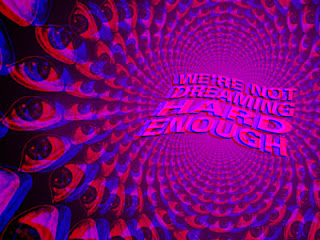
Carly Pugh's Blog Post #12
As I told Carly in my comment on her blog, I was really blown away not only by her idea but by the videos themselves. As I am someone with terrible decision skills as well, I could certainly see how this YouTube playlist idea made its way into Carly's mind. I would go so far as to argue that this is a phenomenal example of multimedia writing. First of all, Carly shared with many others (and did so instantly), her ideas on education and its philosophy in a creative way that will forever be visible on the internet. Her ideas will not die and will be circulated in the educational community. I really enjoyed watching her videos and some of them gave me a little inspiration for ideas on lesson plans and tools that would be infinitely helpful in the classroom. I feel just knowing about the YouTube playlist will open several doors for the way I will use video in my classroom. Thanks again, Carly!
The Chipper Series and EDM310 For Dummies
While I must admit that I found "The Chipper Series" really amusing, I would like to think that students who are mature enough to be enrolled in this class would be able to fully recognize the sarcasm portrayed by Ms. Jamie Lynn. However, while some students may realize the video is satirical, that is not to say it's not still happening. Chipper's journey seems similar to my first college experience. I really was not ready to be fully involved in college courses and I could not meet all the expectations I needed to, so I decided that waitressing was the way to go! Like Chipper says, it's great money! That's not really true at all. After finding this out the hard way, a husband, and a baby later, I'm back here sitting in Dr. Strange's EDM310 lab wishing that I knew how to NOT procrastinate. I must admit that I am exponentially better than a few years ago, but I know enough to know I could use some work.
I loved the idea of EDM310 For Dummies. I was seriously hoping this book really existed. I actually perused the internet hoping I would stumble upon something similar. No such luck. I think these girls do a fantastic job portraying the fright that is overwhelming at the beginning of this course.
I have been thinking recently of movies that I would like to create. I was having a hard time coming up with just one idea. My poor fickle brain had about twenty zillion ideas floating around that barely made one cohesive thought. And then it hit me! Why not do a sequel, so to speak of "EDM 310 For Dummies?" It could be compiled of tutorials by students on the many different aspects of EDM310 that freak everybody out! Students could be split into groups...maybe I'll stop right here and use this for my "Create your own project" post. I hope you get the general idea though.

Learn to Change, Change to Learn
This video really spoke to me from its very beginning statements. This video opens with profound statements such as the US being ranked last (55 out of 55 sectors surveyed) in terms of technological intensity. How could this statement not knock you out of your chair? It's horrifying! As stated in the video, education is ranked "after coal mining" in terms of its "IT intensiveness." Aren't educators prepping our children for the future? How do we possibly expect to do so if they develop such few technological skills in the classroom? We are entering an era where communication and literacy are being totally redefined. Children are learning these technologies but they are not learning them in the classroom. They need to learn the appropriate sites to venture for their security, how to create blogs, with whom they should be tweeting, how to master wordle, how to create a wikispace, and so much more. All these tools would be so beneficial to children of all ages, and yet somehow we ban the very machines that make this work possible in the schools. Teachers have to be on the verge of emerging technology as well. Even if students will not be allowed to participate in the e-learning experience at school, the teacher can certainly facilitate that type of learning outside the classroom.
So, call me naive but I feel as though Dr. Strange and possibly several other teachers (that I have yet to have as I am new to USA this semester) are doing a fantastic job of preparing us for the educational world Dr. Miller speaks of. Dr. Richard Miller has been a professor at Rutgers University for over 16 years and is the head of their English Department. He takes reading and writing very seriously and is more than prepared to modify those fundamental subjects to be shared within an instant, all around the world. Dr. Miller outlines a few "incremental changes" which include making print documents also visible online, enhancing projects with visual and audio components, and being able to see the news as it is happening via live feed from newspapers such as the New York Times.
I truly believe that my classmates and I have been a part of this revolution for quite some time. While there are still some classes that stick to the paper and pen, book learning technique, there are several others that encourage us to use web references, add pictures to our projects, find music that is relevant to our topic, and work with others in different regions via internet collaboration. While these classrooms may be considered too few and far between by multimedia enthusiasts, I believe it is better that we get there in small steps than to take none at all.
Dr. Miller also brings a compelling argument for what he believes to be a fundamental change. He feels that with the technology at hand allowing material to be instantly uploaded and composed from several different sources, shared globally, and even altered according to the viewer-in a separate production, we will be able to "push ideas into our culture" freely and instantly. I agree whole-heartedly when Dr. Miller states that information is not one's to capture and hold close forever. It is meant to circulate, change, and inspire just to name a few. He has an idea that because of our expanding worldwide web and the many different tools becoming available to us each day, there should be very few limits in the way we learn, collaborate, write, explain, teach, and simply live. Dr. Miller states in the second part of "This is How we Dream," that the "only limitations we are facing are the ones we put on ourselves." I'm beginning to see a pattern. Are you? Recall what Dr. Pausch said about brick walls. Dr. Miller's and Dr. Pausch's ideas seem to run parallel. The main idea being anything is possible! Dr. Miller goes on to insinuate that by sharing ideas with others and keeping our lines of communication open with educators throughout the world using various internet tools, our culture will come together in the name of multimedia writing and learning to produce a fascinating fundamental change in the name of education.

Carly Pugh's Blog Post #12
As I told Carly in my comment on her blog, I was really blown away not only by her idea but by the videos themselves. As I am someone with terrible decision skills as well, I could certainly see how this YouTube playlist idea made its way into Carly's mind. I would go so far as to argue that this is a phenomenal example of multimedia writing. First of all, Carly shared with many others (and did so instantly), her ideas on education and its philosophy in a creative way that will forever be visible on the internet. Her ideas will not die and will be circulated in the educational community. I really enjoyed watching her videos and some of them gave me a little inspiration for ideas on lesson plans and tools that would be infinitely helpful in the classroom. I feel just knowing about the YouTube playlist will open several doors for the way I will use video in my classroom. Thanks again, Carly!
The Chipper Series and EDM310 For Dummies
While I must admit that I found "The Chipper Series" really amusing, I would like to think that students who are mature enough to be enrolled in this class would be able to fully recognize the sarcasm portrayed by Ms. Jamie Lynn. However, while some students may realize the video is satirical, that is not to say it's not still happening. Chipper's journey seems similar to my first college experience. I really was not ready to be fully involved in college courses and I could not meet all the expectations I needed to, so I decided that waitressing was the way to go! Like Chipper says, it's great money! That's not really true at all. After finding this out the hard way, a husband, and a baby later, I'm back here sitting in Dr. Strange's EDM310 lab wishing that I knew how to NOT procrastinate. I must admit that I am exponentially better than a few years ago, but I know enough to know I could use some work.
I loved the idea of EDM310 For Dummies. I was seriously hoping this book really existed. I actually perused the internet hoping I would stumble upon something similar. No such luck. I think these girls do a fantastic job portraying the fright that is overwhelming at the beginning of this course.
I have been thinking recently of movies that I would like to create. I was having a hard time coming up with just one idea. My poor fickle brain had about twenty zillion ideas floating around that barely made one cohesive thought. And then it hit me! Why not do a sequel, so to speak of "EDM 310 For Dummies?" It could be compiled of tutorials by students on the many different aspects of EDM310 that freak everybody out! Students could be split into groups...maybe I'll stop right here and use this for my "Create your own project" post. I hope you get the general idea though.

Learn to Change, Change to Learn
This video really spoke to me from its very beginning statements. This video opens with profound statements such as the US being ranked last (55 out of 55 sectors surveyed) in terms of technological intensity. How could this statement not knock you out of your chair? It's horrifying! As stated in the video, education is ranked "after coal mining" in terms of its "IT intensiveness." Aren't educators prepping our children for the future? How do we possibly expect to do so if they develop such few technological skills in the classroom? We are entering an era where communication and literacy are being totally redefined. Children are learning these technologies but they are not learning them in the classroom. They need to learn the appropriate sites to venture for their security, how to create blogs, with whom they should be tweeting, how to master wordle, how to create a wikispace, and so much more. All these tools would be so beneficial to children of all ages, and yet somehow we ban the very machines that make this work possible in the schools. Teachers have to be on the verge of emerging technology as well. Even if students will not be allowed to participate in the e-learning experience at school, the teacher can certainly facilitate that type of learning outside the classroom.
Subscribe to:
Posts (Atom)